STL Home Journey
George Kindler
13 Years Experience At Your Fingertips
On a $70,000 salary in St. Louis, your maximum home budget is $226,000–$297,000 — that's what lenders will approve depending on your debt, down payment, and credit score. At the top of that range you're in Mehlville, Affton, Arnold, and Maplewood. Here's the real math — using actual St. Louis property taxes and insurance — so you know exactly what you're working with before you talk to a lender.
Lenders use your gross monthly income ($5,833/month on a $70K salary) and apply debt-to-income ratios to determine how much you can borrow. Here's the breakdown:
Why the range? Your exact buying power depends on:
Here's the full PITI breakdown (Principal, Interest, Taxes, Insurance) for a $250,000 home in South County with a 3.5% down payment (FHA loan):
| Component | Monthly Cost | Annual Cost |
|---|---|---|
| Principal & Interest (6.5% rate) | $1,524 | $18,288 |
| Property Taxes (1.14% in South County) | $237 | $2,850 |
| Homeowners Insurance | $125 | $1,500 |
| PMI (FHA Mortgage Insurance) | $165 | $1,980 |
| Total Monthly Payment | $2,051 | $24,618 |
That's 35% of your gross income. Lenders will approve it, but you'll need to budget carefully. If you have a car payment ($400/month) and student loans ($300/month), you're at 47% total debt ratio—which pushes you to the lower end of your budget ($230K).
This is where St. Louis gets tricky. The same $250K home costs you $56 more per month in South County (1.14% tax rate) than in St. Charles County (0.92% tax rate).
| Area | Tax Rate | Annual Taxes ($250K Home) | Monthly Impact |
|---|---|---|---|
| St. Charles County | 0.92% | $2,300 | $192/month |
| South County | 1.14% | $2,850 | $237/month |
| West County (Kirkwood) | 1.32% | $3,300 | $275/month |
Translation: Your $70K salary goes further in St. Charles County than in South County. The lower tax rate means you can afford a slightly bigger or newer home for the same monthly payment.
These are the St. Louis neighborhoods where your maximum budget puts you at or near the median — meaning you're a realistic buyer, not stretching:
South County. The fastest-moving market in this price range in the metro. Over half sell first weekend. Your budget fits well here — but you need to be pre-approved and ready.
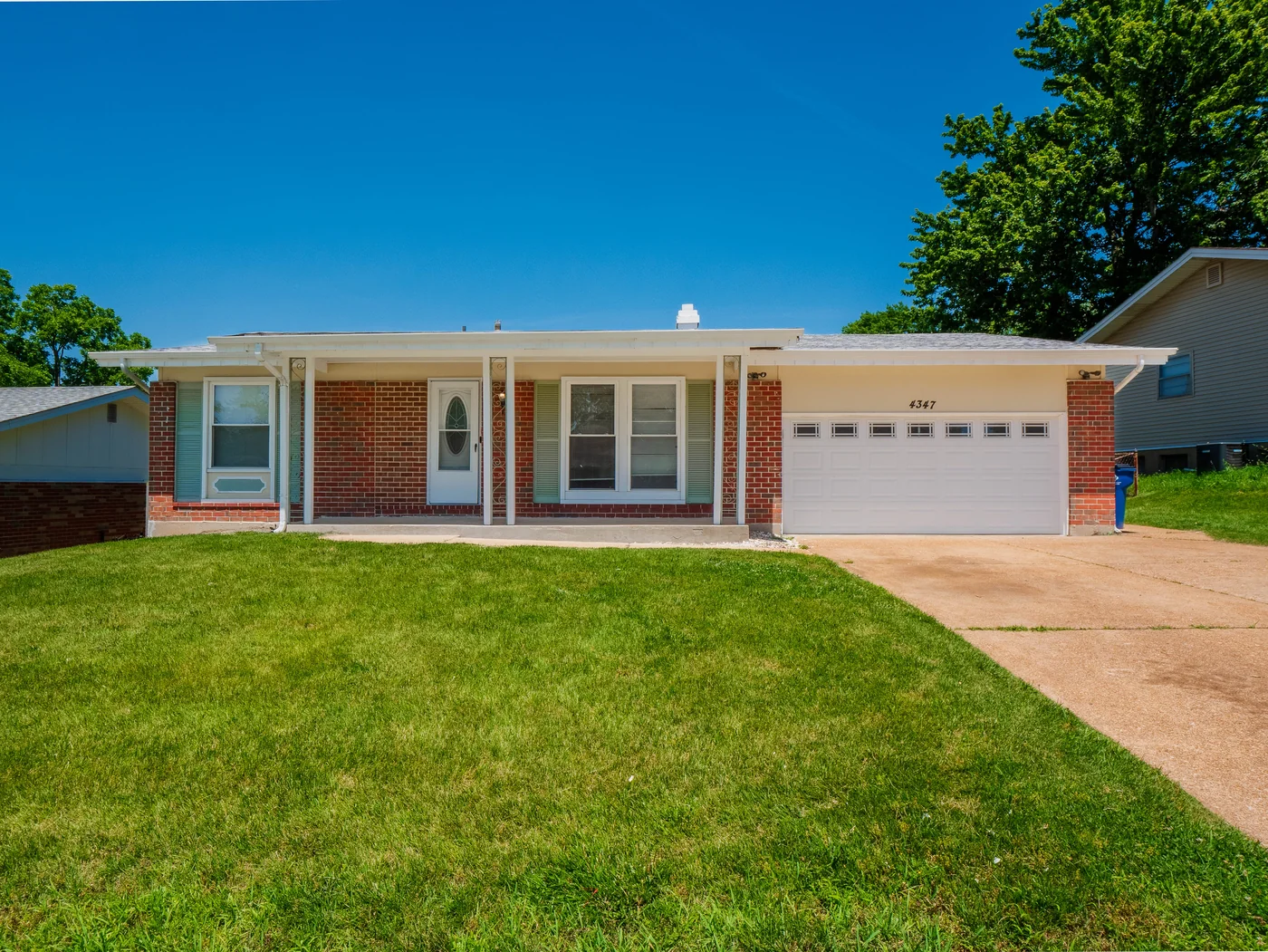
South County. Slightly above your midpoint — stretches your budget but stays in range with good credit and no debt. Brick ranches, strong resale history.
Jefferson County. Upper end of your range. Lower tax rate than South County helps monthly payments. Slightly more inventory, less first-weekend pressure.
Inner suburb. Walkable, established, distinct character. Slightly slower than South County — gives you a bit more time. At the upper end of your range.
Your budget hits the median. Solid starter home area with good schools, close to 55/270. Competitive market—expect multiple offers if priced right.
Your budget is ABOVE median here. You can be picky. Good bones, smaller lots, working-class area with solid value. Close to Grant's Farm.
Slightly above your max, but lower end of Arnold is within reach. Jefferson County = lower taxes. Family-oriented, larger lots, more space for the money.
Median is high, but starter homes exist in the $240-270K range. Great schools, parks, shopping. Your budget gets you a smaller/older home here.
Jefferson County location. Your budget lands at lower end but still gets you space and land. More rural feel, longer commute to city.
Hot market. Your budget is at lower end. Newer construction, good schools, family-friendly. Expect competition in your price range.
Most people making $70K don't realize their car payment is the reason they can't afford more house. Here's the math:
Scenario 1: No Debt
Scenario 2: $400 Car Payment + $300 Student Loans
That $700/month in existing debt just cost you $30,000 in buying power.
What lenders see: If you're making $70K with a $600 car payment, $400 in student loans, and $200 in credit card minimums, your total debt ratio is already at 21% before adding a mortgage. That leaves you only 22% for housing—which caps you around $220K-$230K.
Different loan types require different down payments. Here's what you need saved for a $250,000 home:
| Loan Type | Down Payment % | Cash Needed | Closing Costs | Total Cash to Close |
|---|---|---|---|---|
| VA Loan (0% down) | 0% | $0 | ~$7,500 | $7,500 |
| FHA Loan (3.5% down) | 3.5% | $8,750 | ~$7,500 | $16,250 |
| Conventional (5% down) | 5% | $12,500 | ~$7,500 | $20,000 |
| Conventional (20% down) | 20% | $50,000 | ~$7,500 | $57,500 |
Reality check: Most first-time buyers on a $70K salary go FHA (3.5% down) or VA (0% down if eligible). Saving $50K for 20% down takes years—and waiting means you're paying rent instead of building equity.
Common advice says "save 20% to avoid PMI." But let's do the math on waiting:
Buy now with 3.5% down ($8,750):
Wait 3 years to save $50,000:
You "saved" $42K in down payment but spent $50K in rent and the house costs $23K-$38K more. The math doesn't work unless you're paying very low rent or expect a market crash.
Your credit score directly affects your interest rate—which changes your monthly payment and total buying power.
| Credit Score | Interest Rate | Monthly P&I ($250K) | Total Interest Paid |
|---|---|---|---|
| 760+ | 6.25% | $1,539 | $304,040 |
| 700-759 | 6.50% | $1,580 | $318,800 |
| 660-699 | 6.875% | $1,642 | $341,120 |
| 620-659 | 7.25% | $1,706 | $364,160 |
A 620 credit score vs 760 costs you an extra $167/month—which is $60,120 over 30 years. If your score is below 680, spend 6 months fixing it before you buy. Pay down credit cards, dispute errors, don't open new accounts.
Here's the uncomfortable truth: lenders will approve you for more house than you can comfortably afford.
On a $70K salary:
Why the gap? Lenders make money on loans. They qualify you at the maximum you can technically afford—not what leaves you room for car repairs, medical bills, or saving for retirement.
My rule: If your mortgage + taxes + insurance + HOA is more than 35% of your gross income, you're house-poor. You'll be one car repair or medical bill away from credit card debt. Stay closer to 30% if you can.
Your mortgage payment isn't your only housing cost. Budget for these too:
Add it up: your $2,051 mortgage becomes $2,500-$2,700/month total housing cost when you include everything.
This is the big question for buyers at $70K. You can afford Oakville (Mehlville Schools) comfortably, or stretch to Crestwood (Lindbergh Schools) and be house-poor. Is it worth it?
The school district premium in South County:
On a $70K salary, stretching to Lindbergh means:
Better strategy: Buy in Mehlville now, build equity for 5-7 years, then move up to Lindbergh when you're making $90K-$100K. Your kids will be in Mehlville for elementary school (which is fine) and Lindbergh for middle/high school (when it matters more).
Use the affordability calculator to run your numbers with your actual debt, down payment, and credit score. It pulls real St. Louis property tax and insurance data—no national estimates.
Calculate Your Budget →If you're making $70K and ready to buy in St. Louis, here's your roadmap:
Mistake 1: Buying at the top of your budget. You're approved for $260K, you buy at $258K, then the HVAC dies and you can't afford the $8K repair. Now you're on a credit card at 24% interest.
Mistake 2: Ignoring property taxes. You see a $250K home in Kirkwood (1.32% tax rate) and a $250K home in St. Peters (0.92% tax rate). The Kirkwood home costs you $83/month more. Over 30 years, that's $30K.
Mistake 3: Thinking you'll "grow into" the payment. "I'll get a raise next year" is not a financial plan. Buy what you can afford on today's income, not projected income.
Mistake 4: Skipping inspection to win the deal. In competitive markets (Oakville, Imperial, Fenton), buyers waive inspection to win. But if you're at the top of your budget, you can't afford a $15K foundation repair surprise. Don't waive unless you have cash reserves.
Mistake 5: Buying a fixer-upper "to save money." That $220K house with "good bones" will cost you $40K in repairs before it's livable. If you don't have the cash, buy move-in ready at $250K instead.
Making $70,000 in St. Louis puts you in a solid position to buy a starter home in good neighborhoods. You're looking at:
It's not going to be a showstopper. It's not going to have granite countertops and a finished basement. But it's yours, it's in a decent school district, and you're building equity instead of paying rent.
Give it 5-7 years, and you'll have $40K-$60K in equity to move up to Lindbergh Schools or West County when you're making $90K-$100K.

The Closing Pros LLC
Licensed Missouri Real Estate Brokerage
Office: 314-998-4550 · George's Direct Line: 314.435.1087
All figures are estimates for educational purposes. Actual loan approval depends on credit, debt-to-income ratio, employment verification, and lender guidelines. Property taxes, insurance, and interest rates vary by location and individual circumstances. Consult with a licensed lender for exact pre-approval amounts.