
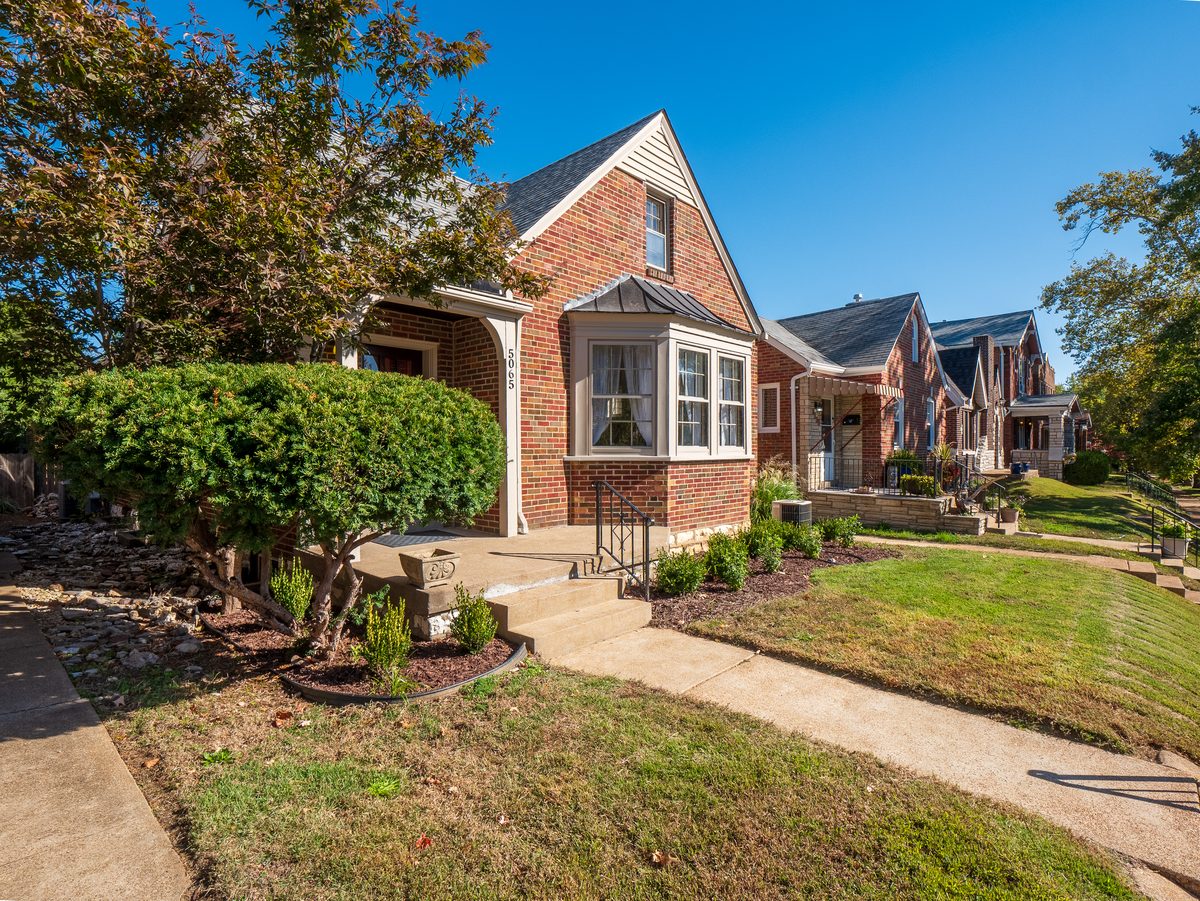
South City St. Louis.
19 neighborhoods. One school district. Brick on every block. The mistake is treating South City like one market — a $110K buyer and a $230K buyer are not shopping the same version of it, and the name recognition gap between adjacent neighborhoods is often worth $50K–$80K in price.
South City Is Not One Market
The phrase "South City" covers everything from Carondelet at $130K to Lindenwood Park at $230K to Soulard and The Hill at significantly higher. The brick looks the same from the outside. The price gap between a recognizable address and an overlooked one can be $60K on construction that is nearly identical. Buyers who search by neighborhood name find the recognized options. Buyers who read the map find what's in between.
South City is entirely St. Louis Public Schools (SLPS). That is not a variable — it does not change by neighborhood, by park proximity, or by how expensive the street is. Every buyer in South City is in SLPS. The school district does not explain price differences between South City neighborhoods. Name recognition, park access, and condition profile do.
South City by Price Tier
South City breaks cleanly into three practical tiers. Entry tier is where the name recognition gaps are widest and the inspection stakes are highest. Mid-tier adds established character and some park proximity. Upper tier is where park anchors, condition profile, and neighborhood identity drive a real premium.
Carondelet, Bevo, Dutchtown, Mt. Pleasant, Gravois Park, Patch, Boulevard Heights
This is where FHA and VA buyers land in South City. Brick bungalows and two-flats with older systems, sewer lateral risk, and the full inspection checklist. House-hacking potential is real in the two-flat inventory. The gap between an as-is and rehabbed property at this tier can be $40K+. Budget $8K–$20K in deferred items on top of any purchase price.
Princeton Heights, Northampton, Southwest Garden, Tower Grove East
Established residential character at a price that reflects the name gap between these neighborhoods and their better-known neighbors. Same SLPS district, same brick, better average condition than the entry tier. Buyers at this level often find the best per-square-foot value in South City — the recognized neighborhoods above them cost 20–30% more for comparable construction.
Lindenwood Park, St. Louis Hills, Tower Grove South, Shaw, Soulard, The Hill, Dogtown, Maplewood
Park anchors, recognized neighborhood identities, and the best-maintained housing stock in South City. Buyers here are paying for the address as much as the house. Lindenwood Park and St. Louis Hills are the Francis Park corridor. Tower Grove South owns the southern park border. Shaw, Soulard, The Hill, and Dogtown carry independent lifestyle identities that sustain demand.
Every South City Neighborhood Is SLPS
St. Louis Public Schools serves all of South City. There is no school district variation between South City neighborhoods — unlike South County where the Lindbergh/Mehlville/Affton split drives significant price differences. In South City, the school district is constant. Price differences between neighborhoods come from park access, condition profile, neighborhood identity, and name recognition — not from schools.
For buyers where the school district drives the decision, South City requires either accepting SLPS or budgeting for private school. That acceptance or that budget is what unlocks South City's pricing — buyers who make that decision find per-square-foot value that the county markets at similar prices can't match on brick construction quality.
⚠ Always verify assigned school by exact property address with SLPS before making any school-driven decisions. Assigned school within SLPS varies by address even within the same neighborhood.
The Price Between the Names
South City is full of adjacent neighborhoods with similar construction and dramatically different prices. Tower Grove East vs. Tower Grove South — same park, $40K gap. Princeton Heights vs. St. Louis Hills — same brick, $80K+ gap. Northampton vs. Tower Grove South — same construction era, significant price difference. The gap is almost never explained by the house. It's explained by which name buyers search for.
Buyers who search by address rather than by neighborhood name find these gaps. Buyers who search by neighborhood name pay for the recognition. Both are valid strategies — but they're different strategies, and they produce different prices on comparable construction.
What Every South City Buyer Needs to Know
South City brick is not maintenance-free brick. Every neighborhood on this page shares the same inspection checklist regardless of price tier: sewer lateral condition, cast iron drain lines, older electrical panels (Federal Pacific and Zinsco appear), tuck-pointing, older HVAC, and the standard systems of mid-20th century construction.
The sewer lateral is the highest-stakes variable in all of South City. The city's older infrastructure means lateral replacement is common across all neighborhoods — not a sign of a bad property, a sign of an older city. Scope it before you close on anything in South City regardless of the neighborhood or the price point. Budget $8K–$15K for potential sewer work on any property that hasn't had documented lateral replacement.
Complete Neighborhood Index
Run the Numbers Before You Tour
Want the Straight Version?
No generic pitch. A real conversation about which South City neighborhood actually fits your budget, your tolerance for the inspection checklist, and whether the name recognition premium is worth it for your situation. I grew up in South City. I lived in Dogtown for six years. I've walked these blocks and I know what the price gaps actually represent.
Call George · 314.435.1087 Run Affordability First
Grew up in South St. Louis, lived in Dogtown for 6 years, now in South County. You'll find us at White Flag Church on Sundays. This is my city, and I know it well.